
(And What That Means for Your Employer Brand)
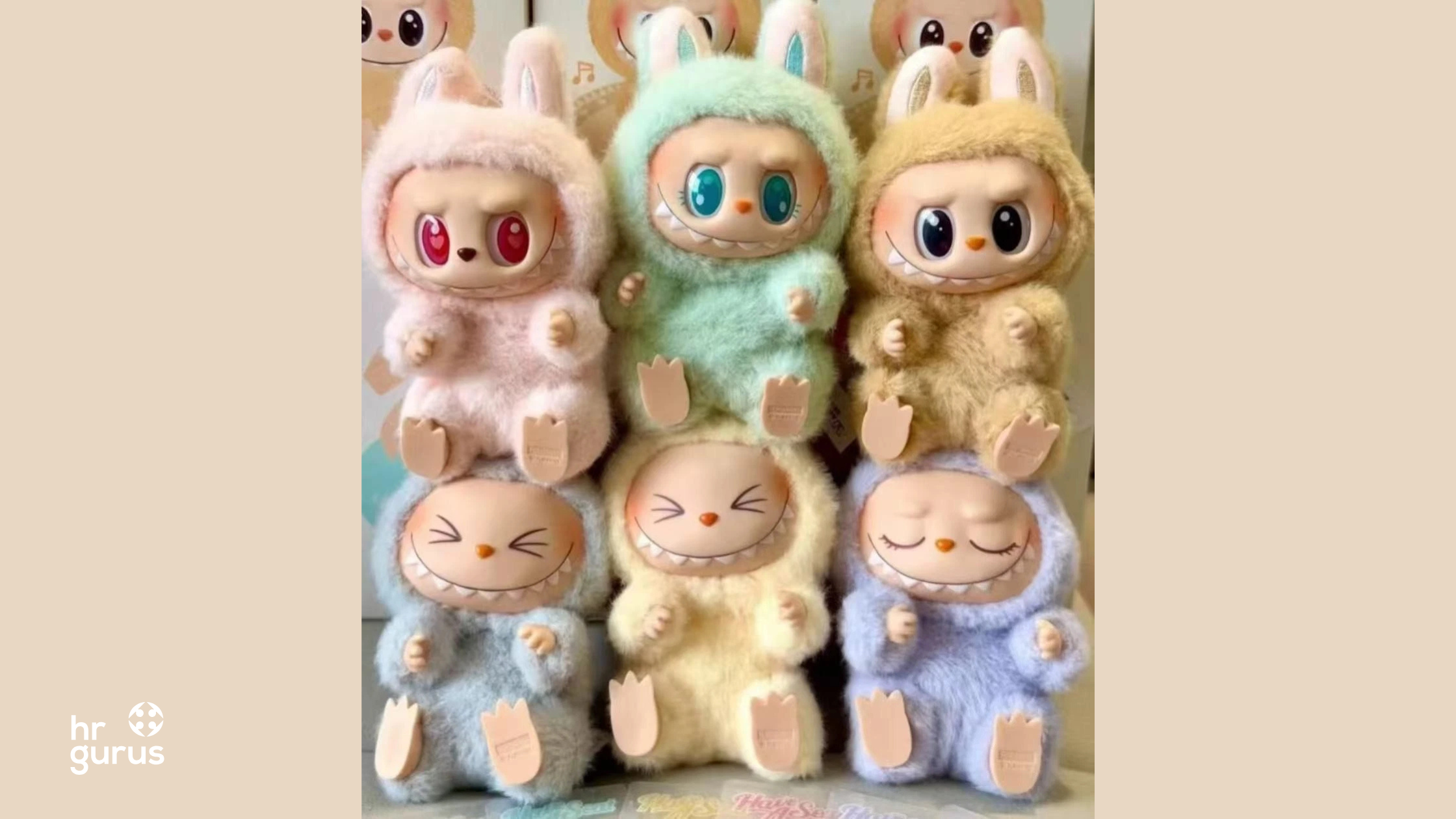
Move over, Birkin bags. Gen Z is spending their cash on vinyl figurines with snaggle teeth and creepy-cute grins.
Meet Labubu, a weird little character from Hong Kong that’s got Gen Z (and younger Millennials) scrambling to spend $15 to $300+ a pop. It’s not your typical status symbol, but that’s the point. Labubu is part of the art toy craze. Quirky, collectible, and dripping with niche appeal.
And if you’re an employer still trying to attract top talent with generic perks and ping-pong tables, you’re missing the bigger picture.
Because this toy obsession isn’t about toys.
It’s about identity, value, and meaning. And it’s a masterclass in how to build an Employer Value Proposition (EVP) that actually resonates.
What Labubu tells us about Gen Z (and why you should care)
We work with founders, CEOs and business leaders every day who are scratching their heads about why they can’t attract or keep younger employees.
Here’s the reality:
- Gen Z doesn’t want more stuff. They want meaningful experiences.
- They aren’t chasing big titles. They’re chasing alignment with their values.
- They crave belonging, not just benefits.
Labubu and the whole collectible culture is a symbol of that. It’s niche. It’s weird. It’s limited edition. And it represents who someone is, not just what they own.
If your EVP doesn’t tap into those same psychological drivers, you’re toast.
Let’s talk about the lipstick effect
There’s a term in consumer psychology called the lipstick effect. It means that even in a cost-of-living crisis, people still buy small luxuries to feel better. Not the $5,000 handbag. The $30 lipstick.
Labubu is Gen Z’s lipstick.
A small hit of joy. A badge of self-expression. Something just for them.
So what’s the workplace version?
- Micro-moments of recognition
- Meaningful autonomy
- Belonging without performance pressure
- EVPs that speak to who they are, not just what they do
Forget cookie-cutter mission statements. Your EVP should feel like a collectible. Distinct. Coveted. Designed with your people in mind.
What this means for Employer Branding in 2025
Let’s get real. Most employer brands are still built like marketing campaigns from 2010.
Stock photos. Vague values. Cringe hashtags. It’s performative. And Gen Z can smell the BS from a mile away.
Your brand is what your people say about you behind your back.
And right now, they’re comparing your offer to someone else’s Labubu—unique, limited, community-driven.
Want to stand out? Do this:
- Build an EVP that’s story-driven and weirdly specific. Not “We value teamwork”—say: “We back each other. Even on the crap days.”
- Ditch corporate jargon. Speak in the same language your people do.
- Turn your leaders into brand champions. If your managers aren’t living the EVP, it’s dead-on arrival.
- Offer micro-luxuries that feel personal. Think: tailored learning budgets, passion project days, or even just high-trust flexibility.
What leaders need to understand
This generation isn’t lazy. They’re just done with performative leadership and token perks.
They want:
- Honest, human connection
- Clear boundaries and respect for their energy
- A sense of contribution that aligns with their values
If you’re still managing with top-down, carrot-stick methods, you’re going to lose them.
Leaders must now think like curators—designing environments that spark loyalty, belonging, and purpose.
Your leadership style is your real EVP.
FAQs
Does this mean we need to start offering quirky perks like the ones mentioned to attract Gen Z talent?
Not literally, no. The point isn’t the specific perk, it’s what it represents: something personal, distinct, and genuinely meaningful rather than generic. A tailored learning budget or a passion project day works because it feels designed for the individual, not because it’s trendy. Copying a specific perk without the underlying thinking will land as performative, which is exactly what this generation notices fastest.
How do we actually find out if our EVP resonates, rather than guessing?
Ask your current team directly, particularly your younger or more recently hired staff, what actually made them stay or nearly leave. Generic engagement surveys often miss this. What you’re looking for is specific language, the actual phrases people use to describe why the culture works or doesn’t, and building your EVP around that rather than a corporate values statement written in a boardroom.
Our managers don’t really “live” our stated values day to day. Does that actually matter that much?
Yes, more than almost anything else here. An EVP is only as credible as the leaders delivering it. If your stated values talk about trust and flexibility but a manager micromanages and second-guesses every request, the mismatch gets noticed fast and spreads through word of mouth. Fixing leadership behaviour matters more than rewriting the values statement itself.
Final word: Collectibles, culture and competitive edge
Labubu isn’t just a trend. It’s a metaphor.
Gen Z is building collections of experiences, of values, of work stories they’re proud to tell.
The question is: Is your company one they’d want to collect?
At HR Gurus, we help businesses cut the fluff and build real, human-centred cultures that attract and keep top talent. If your EVP needs a reset or your leadership team needs a crash course in what Gen Z really wants, let’s talk.
- About the Author
- Latest Posts

Director and founder of HR Gurus, Emily is a talented and award winning HR professional with over 15 years experience and a proven track record in all areas of strategic and operational Human Resource Management.

Get a personal consultation.
Call us today at 1300 959 560.
Here in HR Gurus. We make HR simple because it should be.