

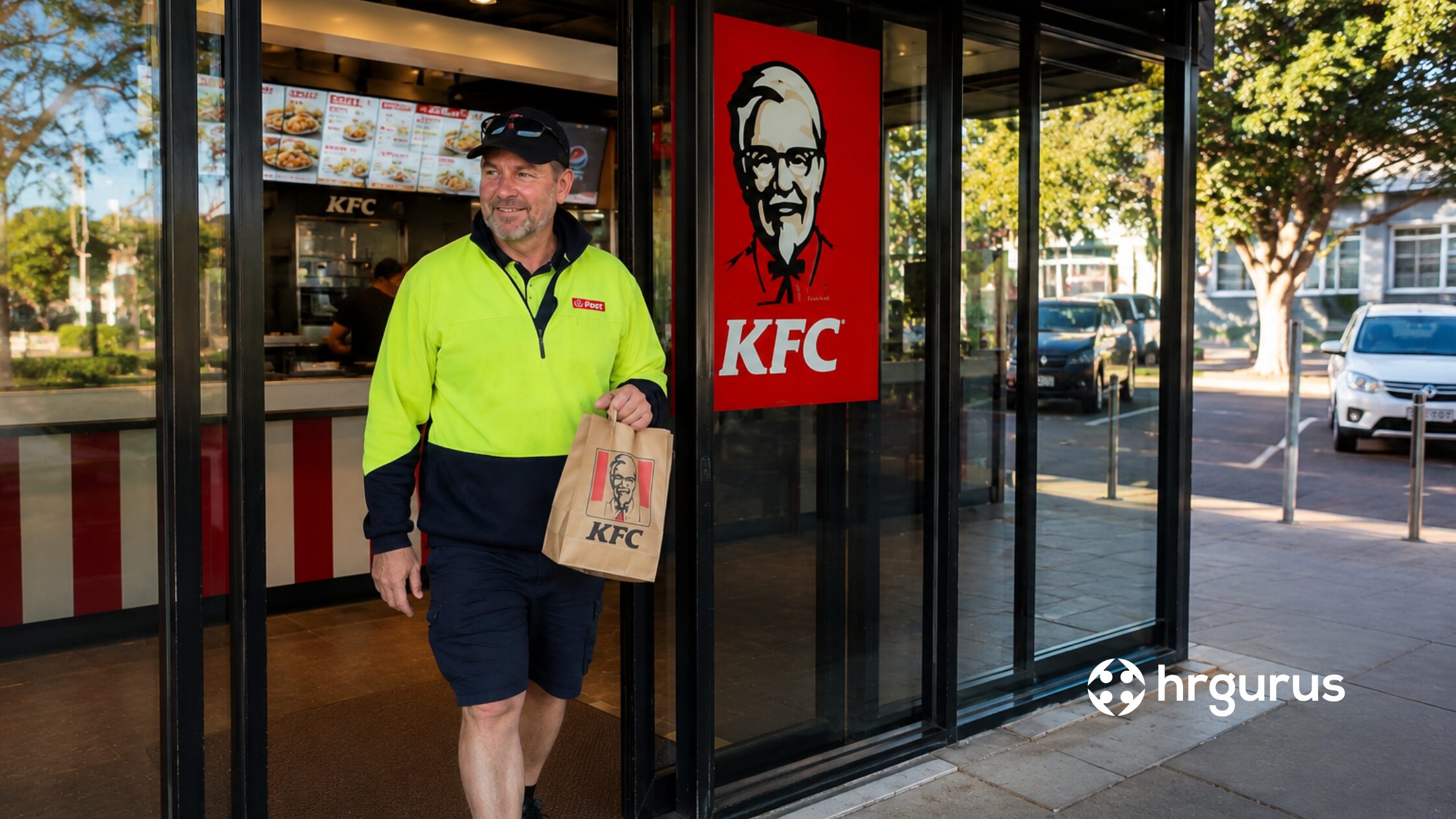
In July, Australia Post sacked a postie for driving the work van to KFC on the clock. Within days, KFC turned it into a national campaign. Postcards went out to posties, redeemable for a free feed, official brand statement, Instagram post, 18,000 likes, and free media coverage most businesses would pay six figures for.
Great outcome for KFC. Not so great for Australia Post, who now star as the punchline in someone else’s marketing win.
That’s the bit most business owners miss when they’re deep in a difficult dismissal. It’s not just the Fair Work claim you need to worry about. It’s what the story looks like once it leaves your building. Yikes.
What actually happened with the Australia Post sacking?
A postal worker was sacked for taking a marked Australia Post van to a KFC restaurant while rostered on. Australia Post treated it as a straightforward misconduct case, unauthorised use of a company vehicle, time theft, the usual grounds for termination.
On paper, that’s a defensible call. Plenty of businesses would land in the same place.
But the story didn’t stay on paper. It hit the news, then social media, then KFC’s marketing team, who spotted an opening and moved on it within days.
How did KFC turn a sacking into a viral marketing win?
KFC and its agency, Ogilvy, sent postcards to local outlets, giving posties an “official” excuse to pop into KFC on their run and collect a free meal. The tone was cheeky, self-aware, and dropped right into a story people were already talking about.
Ogilvy’s team called it low cost, high impact, built to travel fast through the news cycle while the story was hot, not to wait for a six-week campaign approval process.
It worked. Free press, brand love, and a much better outcome for KFC than for the business the story was originally about.
What’s the real risk for your business here?
Most SME owners aren’t thinking about virality when they manage a dismissal. Fair enough, that’s not the job. But this story is a useful reminder of something that matters commercially, not just legally.
If your dismissal process is messy, undocumented, or looks unreasonable from the outside, you don’t just risk an unfair dismissal claim at the Fair Work Commission. You risk becoming the story. And once something’s out of your hands, you don’t get to control the narrative, a competitor, a customer, or a clever marketing team might do that for you.
The businesses that come out fine on the other side of these stories are the ones who can point to a clear, fair, well-documented process. The ones who can’t are the ones left explaining themselves after the fact, while someone else cashes in on the attention.
Getting your dismissal process right matters for more than compliance. Talk to HR Gurus about cutting through the BS and getting it right the first time.
How do you make sure your dismissal doesn’t become someone else’s content?
Get the process right before you act, not after.
- Document the issue clearly, dates, what happened, what policy it breaches
- Give the employee a genuine chance to respond before any decision is made
- Keep records of every conversation and warning along the way
- Make sure the reason for dismissal matches what’s actually in writing
- Get advice before you pull the trigger, not after someone’s already lodged a claim
A dismissal that’s fair and well-run rarely makes headlines. The ones that go sideways are the ones that give everyone else, media, competitors, disgruntled ex-employees, something to run with.
Frequently Asked Questions
Can a dismissal story affect my business even if the sacking itself was fair?
Yes. A fair dismissal can still cause reputational damage if it’s handled clumsily, communicated badly, or looks unreasonable from the outside, regardless of whether it would hold up at the Fair Work Commission.
What’s the biggest reputational risk in a poorly handled dismissal?
Losing control of the story. Once it’s public, other parties, media, competitors, or even brands looking for a marketing moment, can shape the narrative in ways you can’t control.
Does having the right process actually reduce reputational risk?
Yes. A documented, fair process gives you a clear, defensible account of what happened and why, which makes it much harder for the story to be spun against you.
Should small businesses worry about this, or is it just a risk for big brands?
Any business can end up in the news or on social media for the wrong reasons. SMEs often have less capacity to manage the fallout than large corporates, which makes getting the process right upfront even more important.
Don’t let a messy dismissal become someone else’s PR stunt. Book a call with HR Gurus and cut through the BS.
- About the Author
- Latest Posts

Director and founder of HR Gurus, Emily is a talented and award winning HR professional with over 15 years experience and a proven track record in all areas of strategic and operational Human Resource Management.



Get a personal consultation.
Call us today at 1300 959 560.
Here in HR Gurus. We make HR simple because it should be.